Every take begins with a sound. The sharp clap of the slate marks the start of motion and syncs the heartbeat of an entire film crew. Long before editing software and digital monitors, filmmakers relied on this small board to align sight and sound. The tradition began in the early 1920s when talking pictures replaced silent films, and synchronization became essential.
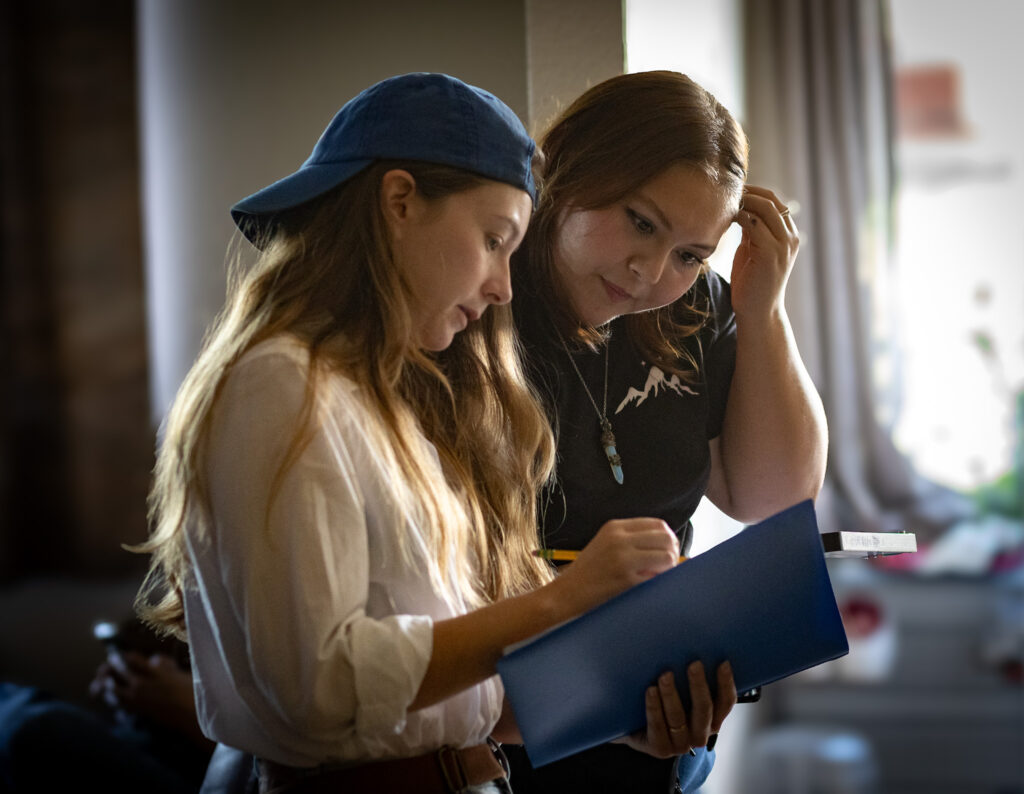
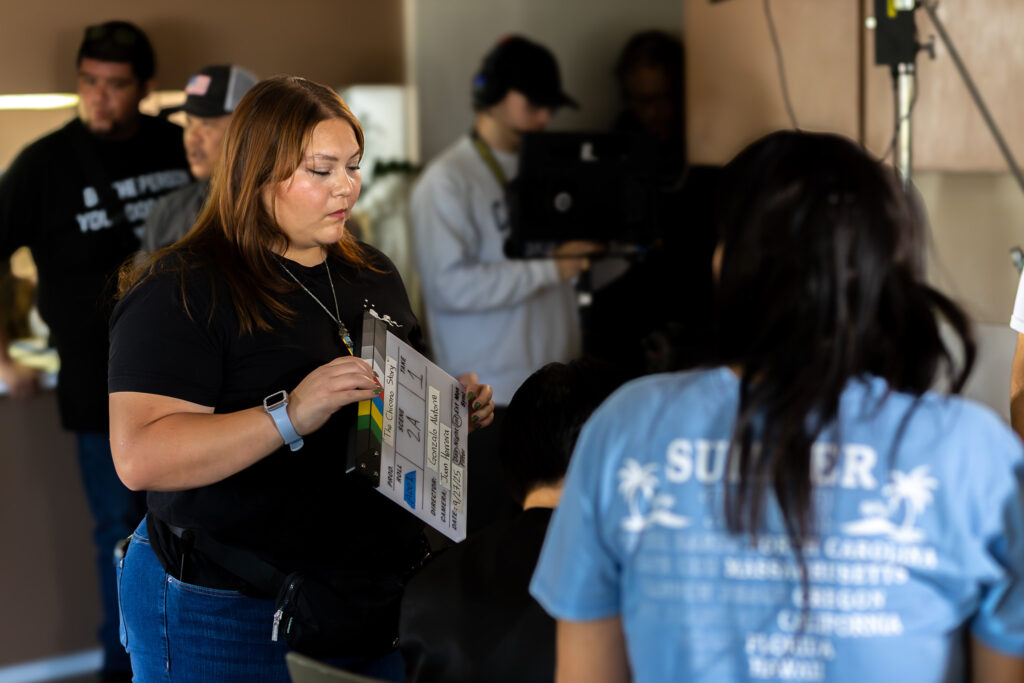
That same tradition still lives on, bridging old Hollywood with modern independent film. On the set of The Chicano Story, slate operator Gitzelle Villa carries that legacy forward. With each clap, she unites the efforts of camera, sound, and story—turning the chaos of production into a rhythm that feels alive.
Precision in Motion
On set, timing is everything. As the Second Assistant Camera (2nd AC), Gitzelle’s job involves labeling scenes, marking takes, and maintaining flow between shots. “This is my second project,” she said. “Before, my first project was with KP, and he saw me and said, ‘You know what, I’ll have you be slate.’ So pretty much any slate would be a second assistant camera.”
The slate is not just a tool in her hands—it’s an instrument of communication. Every clap signals readiness. Every motion carries meaning. Directors, editors, and sound teams all depend on her precision. Through that rhythm, Gitzelle transforms a simple act into an art that holds the film together.
Finding Confidence Through Practice
Learning to slate for the first time is both thrilling and terrifying. Gitzelle remembers that first day clearly. “At first, it was pretty nerve-racking because I had no idea. I just jumped into the role. But after a couple tries, I got used to it. It’s all trial and error, but it’s something you catch onto pretty easily.”
Her words reveal a truth every filmmaker knows—experience comes through mistakes, not perfection. Each repetition builds instinct, and each challenge sharpens skill. What once felt intimidating soon became natural. In the rhythm of each take, Gitzelle found confidence and control.
Connection and Collaboration
Film sets thrive on teamwork. Every successful production depends on the people who show up, communicate, and connect. Gitzelle reflects on that bond with clarity. “If you want to either be an actor or be behind the scenes, either way, as long as you have those connections, they’ll get you to where you want to be.”
Her journey with The Chicano Story began through connection—a moment of trust between her and director KP. That trust turned into opportunity. It’s a reminder that the film industry is built as much on relationships as it is on craft. Collaboration, after all, is what keeps every scene in sync.
The Enduring Legacy of the Slate
The slate has remained unchanged through a century of cinematic evolution. Whether made of chalkboard, acrylic, or digital LED, its sound still commands attention. It stands as a symbol of order, rhythm, and teamwork—a link between generations of filmmakers.
For Gitzelle Villa, that single clap represents both respect for tradition and pride in her craft. On the set of The Chicano Story, every take begins with her precision and ends with her mark. She reminds us that in filmmaking, the smallest gestures often carry the greatest meaning. The slate may be simple, but it is the sound of unity, story, and motion.
ABOUT NUVIO
At NUVIO, our mission is to give creators the space and opportunity to visually share their stories with the world. Each project we feature goes beyond the screen—you get to see the behind the scenes development, the passion, and the creative journey that bring every vision to life.
Through our platform, audiences step backstage to witness how independent films are made—from concept to camera to community. Every filmmaker, actor, and crew member has a story to tell, and each story holds its own uniqueness and truth.
NUVIO exists to celebrate those voices and to connect viewers to the heart of creation—where every frame begins with a story, and every creator leaves a mark.